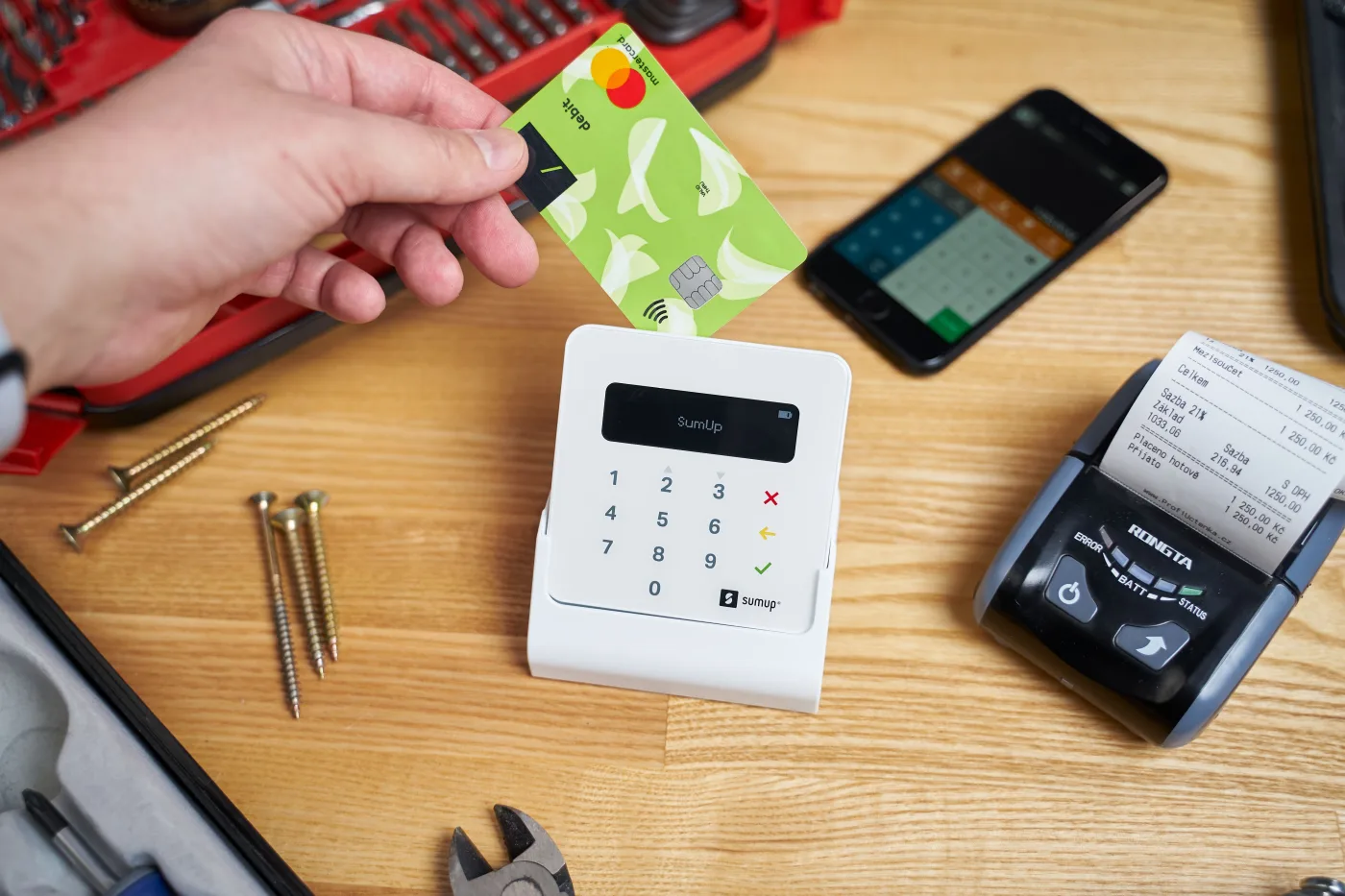
Square Invoices is invoicing built into the Square payments ecosystem, aimed squarely at small businesses. Its distinguishing feature is not the invoice itself but where the invoice sits: inside a platform that already handles card acceptance, online payments and point of sale. This guide treats it as a category example of payment-linked invoicing, explaining what it is, who it suits, the general capabilities of tying billing to a payments platform, its trade-offs, the alternatives, and where buy-side procurement and accounts payable fit alongside it.
Key takeaways
- Square Invoices is invoicing built into the Square payments ecosystem, aimed at small businesses.
- Its strength is linking the invoice directly to card and online payment collection.
- It suits retail and service businesses that already take payments through Square.
- Sell-side invoicing is a different discipline from buy-side procurement and accounts payable.
What is Square Invoices?
Square Invoices is the billing part of a broader payments platform. Where a standalone invoicing tool focuses only on producing and sending an invoice, this kind of product starts from the assumption that you also want to collect the money through the same system that already processes your card payments. The invoice and the payment are two halves of one flow rather than two separate tools stitched together.
That framing matters because Square grew up as a payments company. Its origins are in helping small merchants accept card payments simply, and invoicing was added as one more way for those merchants to get paid. So the product sits firmly at the small-business end of the market, and it makes most sense when you are already inside that ecosystem for other reasons, such as a card reader on the counter or an online store.
This guide is deliberately general. It is not a product review, and it does not quote specific prices, fees or exact feature lists, because those change and vary by region. Instead it looks at what payment-linked invoicing of this type does at a high level and where its natural boundaries lie, so you can judge whether the category suits how your business actually works.
What payment-linked invoicing means
The idea behind payment-linked invoicing is to shorten the distance between sending a bill and receiving the money. In a traditional flow you create an invoice, email it, and then wait for the customer to arrange a transfer through their own bank. Every extra step is a chance for the payment to be delayed or forgotten. Tying the invoice to a payments platform removes several of those steps at once.
In practice this usually means an invoice that carries a way to pay built into it. The customer opens the invoice, sees a clear amount, and can settle it there and then rather than logging into a separate system. Because the platform already handles card processing, the money and the record of it land in the same place, so reconciliation is simpler than juggling a billing tool and a payment provider that do not talk to each other.
The payment link is the whole point. With standalone invoicing, getting paid is a separate act the customer has to take on their own initiative. With payment-linked invoicing, paying is one click inside the invoice itself, which is why this category tends to shorten the wait for cash.
Core capabilities
Most payment-linked invoicing tools, Square Invoices included, cluster their features around the same core jobs. Knowing them makes it easier to judge whether any given product fits how you bill:
- Invoice creation. Branded, itemised invoices built from reusable templates, with tax and totals worked out for you.
- Integrated payment collection. A way to pay built into the invoice, so customers can settle by card or online without leaving it.
- Payment tracking. A clear view of what has been paid, what is outstanding and what is overdue, updated as money arrives.
- Reminders. Automatic follow-ups on unpaid invoices, so chasing does not depend on you remembering.
- Ecosystem links. Connections to the platform's point of sale, online store and customer records, so billing shares data with the rest of the system.
The common thread is removing friction from getting paid. Each capability exists to shorten the gap between finishing the sale and the money landing in your account, which for a small business is often the difference between a comfortable month and a tight one. The distinctive part, compared with a pure billing tool, is that the payment step is not an afterthought but the centre of the design.
Who Square Invoices suits
The best fit for payment-linked invoicing is a business whose billing is essentially self-contained and whose main need is to collect money quickly. If your relationship with money is mostly about sending bills out and watching them get paid, a tool that folds payment into the invoice is not just adequate, it is often the better choice precisely because it does one job cleanly.
Retail businesses
Shops and stalls already taking card payments who want invoices to run through the same system.
Service providers
Trades and small services that bill after the job and want the customer to pay on the spot.
Sole traders
One-person businesses that want tidy billing without the weight of full accounting software.
Small teams
A handful of people whose billing is straightforward and whose spending is easy to keep an eye on.
If that describes you, the honest advice is to pick a well-made invoicing tool that suits your payment setup and get on with the work. You do not need heavier machinery to send a customer a bill and collect it. If you would rather produce one-off invoices without committing to a subscription, our invoice generator guide covers the lighter options, and our roundup of invoice apps compares the wider field.
Pros and cons of payment-linked invoicing
Every category of software makes trade-offs, and it is fairer to weigh them plainly than to pretend a tool is flawless or useless. Payment-linked invoicing has real strengths and equally real boundaries:
| Strengths | Limits |
|---|---|
| Payment built into the invoice, so cash arrives sooner | Best value only if you use the wider platform |
| One system for billing and card acceptance | Focused on money coming in, not going out |
| Quick to learn and quick to use | Little or no control over purchasing or spend |
| Good fit for simple, self-contained billing | Gaps appear as a team and its buying grow |
None of these limits is a criticism. A payments-and-billing tool is meant to help you get paid, and it would be odd to fault it for not managing your purchasing. The point is simply to match the tool to the job. For a small operation with simple spending, the strengths dominate and the limits rarely bite. There is also a natural pull towards the ecosystem: the more of the platform you use, the more the invoicing side pays off, which is worth weighing if you already rely on other providers.
The calculation changes as an organisation grows. When more people can commit the company's money, when budgets need protecting, and when supplier bills have to be checked against what was actually ordered, the gaps on the right of that table stop being theoretical and start costing time and money.
Alternatives at a category level
Square Invoices is one option among several, and it helps to see the shape of the field rather than a list of brand names. Broadly, tools that produce invoices fall into a few groups, and the right one depends on how you already take payment and how much billing you do.
Standalone invoicing software focuses purely on creating, sending and tracking invoices, often connecting to a separate payment provider of your choosing. It suits businesses that want billing decoupled from any single payments platform. Accounting suites go the other way, folding invoicing into a broader package that also handles books, expenses and reporting, which suits those who want one system for their whole financial picture. Free or one-off invoice generators sit at the lightest end, ideal when you send only a handful of invoices and do not want a subscription at all.
Payment-linked invoicing, the category Square Invoices belongs to, is distinguished by starting from the payment rather than the paperwork. If collecting money fast is your priority and you already accept cards through a platform, this group tends to fit best. If billing is incidental to a larger accounting need, an accounting suite may serve you better. Matching the category to your real priority matters more than comparing individual products feature by feature.
Sell side and buy side are different disciplines
An invoice looks the same whichever direction it travels, but the discipline around it is not. Everything covered so far concerns the sell side: invoices you send to customers and the money you collect. Running a growing business is also about the invoices you receive from suppliers, and paying those belongs to a separate discipline called accounts payable. A supplier's invoice should never be paid on trust alone; it should be checked against what was ordered and what was delivered before any money goes out.
That checking is what sell-side invoicing tools are not built to do, and reasonably so. The moment your team is raising purchase requests, getting them approved, sending orders to suppliers and then matching incoming bills against those orders, you have crossed from billing into procurement. The two look similar because both involve invoices, but the controls they need point in opposite directions: one is about getting money in quickly, the other about letting money out carefully.
A parallel shift is under way on both sides of business through electronic invoicing, where invoices move as structured data rather than PDFs so they can be validated and processed automatically. That trend is reshaping how invoices flow in both directions, but it does not erase the difference between collecting from customers and paying suppliers.
Where buy-side procurement fits
The signal that a business has outgrown pure invoicing is rarely about invoices at all. It shows up in the spending around them. A few questions tend to expose it quickly:
- Approvals. Can more than one person commit money, and does anyone sign off before they do?
- Budgets. Do you know, before a purchase, whether it fits the budget it belongs to?
- Matching. When a supplier bill arrives, can you confirm it against the order and the delivery?
- Audit. If someone asked why a purchase was made, could you show the trail in minutes?
If any of those questions makes you wince, the issue is not your invoicing tool; it is that purchasing has grown past what any sell-side tool was designed to handle. This is where a procurement platform such as ProcureWave fits, not as a rival to Square Invoices but as the layer that governs spending: purchase requests, approval workflows, supplier orders and the matching of bills against them, all in one auditable flow. If you want the fundamentals of the document at the centre of it all, our complete guide to invoices is a good grounding.
Think of the two as complementary rather than competing. A sole trader sending ten invoices a month has no need for approval chains, and pointing them at a procurement platform would be overkill. A growing team that buys from dozens of suppliers has every need for them, and expecting a billing tool to provide that control would be asking it to be something it never claimed to be. The mature choice is to use the right tool for each side of the money: a clean, payment-linked tool for what you collect, and a procurement platform for what you spend.
Choosing what is right for you
Start by being honest about where your business actually is. If your billing is simple, your spending is small enough to keep in your head, and you already take payments through Square, then Square Invoices is a sensible, low-friction choice, and you should not let anyone talk you into more machinery than you need. Match the tool to the job and move on.
If, on the other hand, spending has grown to the point where approvals, budgets and supplier bills are creating real work and real risk, the question is no longer which invoicing tool to buy. It is how to get purchasing under control so that every pound leaving the business has been requested, approved and checked. That is the problem ProcureWave sets out to solve, and it connects the money you pay out to the wider buying process rather than treating each bill as an island.
Either way, the goal is the same: spend less time on admin and more on the work that pays. If you are weighing up whether your spending has outgrown sell-side invoicing, we are happy to talk it through. Get in touch and we will look at your situation honestly, and tell you plainly if a simple payment-linked invoicing tool is still all you need.
Frequently asked questions
What is Square Invoices?
Square Invoices is invoicing built into the Square payments ecosystem. It lets small businesses create and send invoices, take card and online payments against them, and track what has been paid, all tied to the same platform that handles their card acceptance and point of sale.
Who is Square Invoices best suited to?
It suits small businesses that already sell through Square, particularly retail and service operations that take card payments in person or online. If getting paid quickly is the priority and your billing is self-contained, payment-linked invoicing like this is a natural fit. Our guide to invoices covers the fundamentals.
How is payment-linked invoicing different from an accounts payable tool?
Payment-linked invoicing sits on the sell side: it helps you bill customers and collect money coming in. Accounts payable and procurement sit on the buy side, controlling the money going out through purchase requests, approvals and matching of supplier bills. The two solve different problems.
How does ProcureWave relate to a tool like Square Invoices?
ProcureWave is not a replacement for it. Square Invoices helps you get paid, while ProcureWave governs how a growing team spends, with purchasing, approvals and payables joined up. They complement each other on opposite sides of the money.
Want to see this in your own numbers?
Book a tailored demo and we will show ProcureWave running on scenarios that match your business.
Get in touch