Every product you have ever bought reached you through a supply chain: a connected network of suppliers, factories, warehouses and carriers that turns raw material into something on a shelf or a doorstep. Understanding how that network is put together, who the players are, and where things tend to go wrong is the foundation for buying, selling and running any business well. This guide explains what a supply chain is, the stages it moves through, the difference between a supply chain and managing one, the challenges that recur across every industry, and exactly where procurement sits within it.
Key takeaways
- A supply chain is the whole network that moves a product from raw material to end customer.
- It has recognisable stages and key players, split into upstream and downstream halves.
- The supply chain is the network; supply chain management is the discipline of running it.
- Procurement is the upstream gateway that feeds the chain and controls what comes in.
What is a supply chain?
A supply chain is the full network of people, organisations, activities, information and resources involved in moving a product or service from its origin to the end customer. It begins with the extraction or growth of raw materials and ends when the finished product is delivered and paid for. Everyone who adds value along that journey, from a mine or a farm to the courier on your street, is part of the same chain.
The word chain is slightly misleading. A modern supply chain is rarely a single straight line; it is a web of overlapping flows, often spanning many countries and hundreds of businesses. Three things move through it at once: goods flowing forward toward the customer, money flowing backward toward suppliers, and information flowing in both directions so that everyone knows what to make, ship and stock.
Every organisation sits inside a supply chain, whether it is a manufacturer, a wholesaler, a retailer or a service provider. Even a purely digital business relies on a chain of hardware, software and infrastructure suppliers to keep running. Because the chain is only as strong as its weakest link, the way it is designed and managed has a direct effect on cost, speed, quality and resilience.
It helps to picture a familiar example. A cotton t-shirt begins as a crop on a farm, is spun into yarn, woven and dyed into fabric, sewn into a garment, shipped across an ocean, held in a distribution centre, sent to a shop, and finally bought. Dozens of separate businesses in several countries each handled one step, none of them owning the whole journey. That web of hand-offs, multiplied across every product a company sells, is the supply chain in practice.
The stages: from raw material to end customer
While the details vary by industry, most physical supply chains move through a recognisable sequence of stages. Each one adds value and passes the product on to the next:
- Raw materials: the chain starts by sourcing basic inputs such as metal ore, cotton, crude oil or crops, from the suppliers who extract or grow them.
- Manufacturing: materials are processed and assembled into components and then finished goods, often across several factories and suppliers.
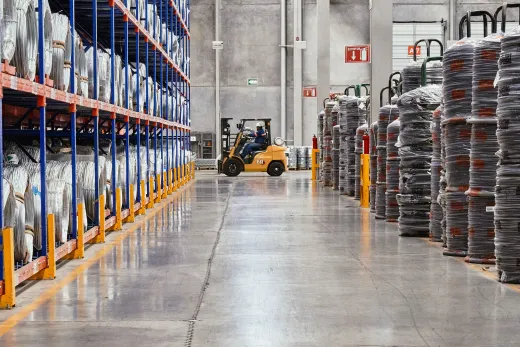
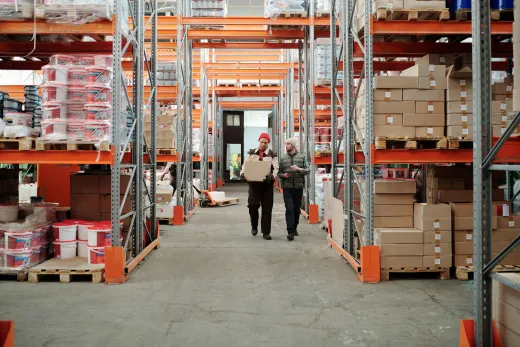
- Warehousing: finished goods are stored, quality-checked and held as inventory ready to meet demand without delay.
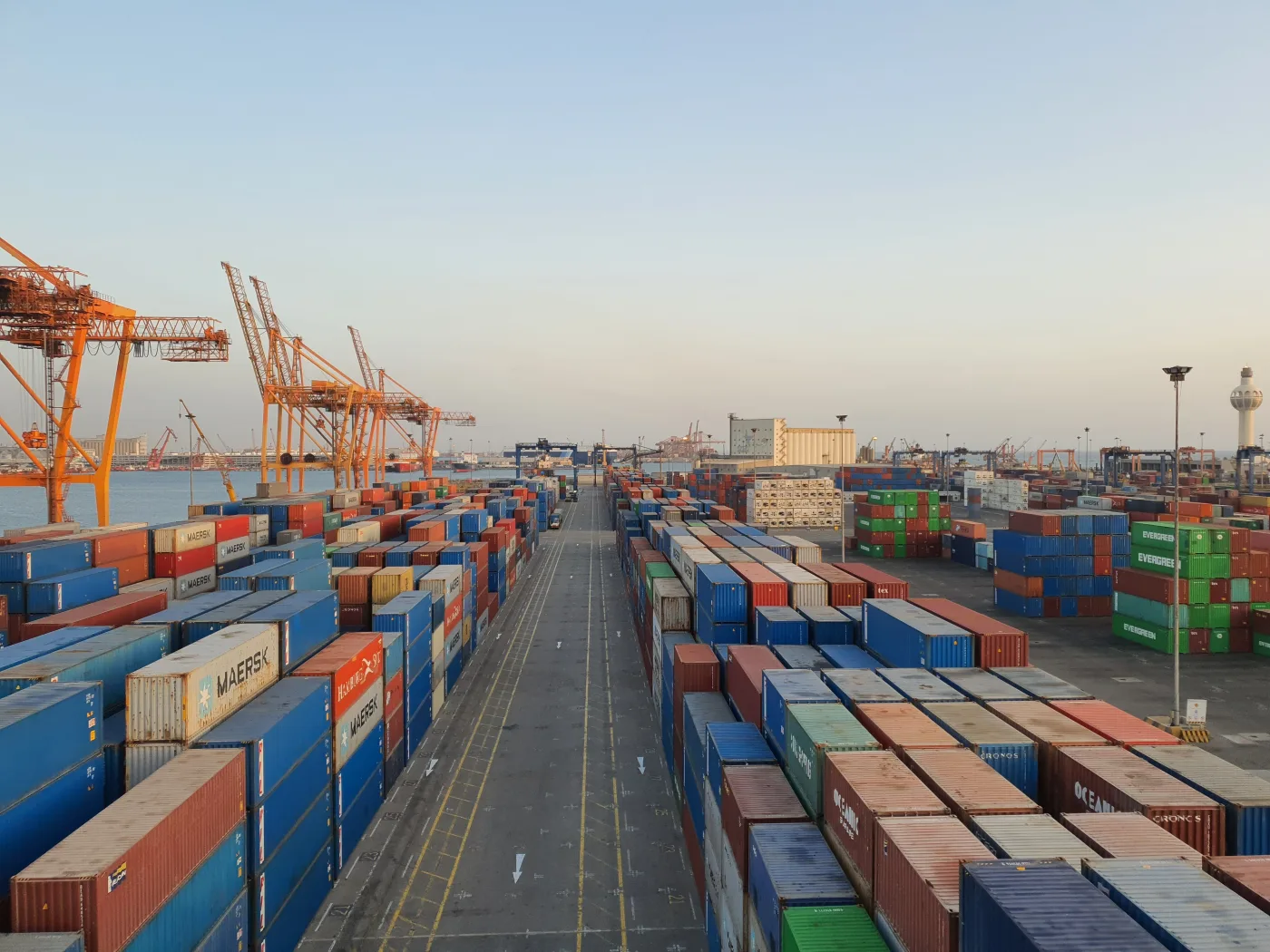
- Distribution: products move through logistics networks of carriers, hubs and distribution centres toward the point of sale.
- Retail and delivery: the product reaches the retailer or is delivered directly, and finally changes hands to the end customer.
Wrapped around all of these stages is planning: forecasting demand, scheduling production and balancing inventory so that supply matches what customers will actually buy. Planning keeps the stages in step, and it is usually where the biggest gains or failures originate. A well-planned chain moves goods just in time; a poorly planned one either drowns in surplus stock or runs out at the worst possible moment.
Not every chain includes every stage, and services have their own version of the sequence: a software company sources talent and infrastructure rather than ore, yet still acquires inputs, adds value and delivers to a paying customer. What changes between industries is the length of the chain and the number of parties involved, not the fundamental shape.
Key players in the supply chain
A supply chain is made of organisations, each playing a distinct role and handing the product to the next. The core players are consistent across almost every industry:
Suppliers
Provide raw materials, components and services that feed production. The origin point of the chain.
Manufacturers
Turn inputs into finished goods, adding the bulk of the product\'s value through processing and assembly.
Distributors
Move and store goods in bulk, connecting factories to the many points where products are sold.
Retailers
Sell to the end customer, whether through a physical shop, a wholesaler or an online store.
Alongside these sit the enablers who keep everything moving: logistics and transport providers, carriers, freight forwarders, customs agents and the technology platforms that carry information between everyone. The final and most important player is the customer, whose demand pulls the entire chain into motion. No order at the end means nothing needs to move at the start.
A single business often plays several of these roles at once, and the number of hand-offs has a direct bearing on how much can go wrong, since every additional party is another relationship to manage and another potential point of delay. This is why organisations work hard to understand not just their direct suppliers but their suppliers\' suppliers, the deeper tiers they cannot easily see yet still depend on.
Upstream vs downstream
Supply chain professionals split the network into two halves relative to any given business. Getting this orientation right makes the rest of the vocabulary fall into place.
| Direction | Who it involves | What flows |
|---|---|---|
| Upstream | Your suppliers and their suppliers | Inbound materials and components |
| Your business | The point of reference | Value added here |
| Downstream | Distributors, retailers, customers | Outbound finished goods |
Upstream is everything on the supply side, closer to the raw material. Downstream is everything on the demand side, closer to the customer. If you are a manufacturer, your component suppliers are upstream and the retailers who sell your products are downstream. The same business is upstream to its customers and downstream to its own suppliers, which is why the terms are always relative to where you stand in the chain. Managing the upstream side well is largely a procurement task; managing the downstream side is a distribution and customer-service task.
The distinction is more than jargon. Upstream, the priorities are supplier reliability, input cost and lead time; downstream, they are availability, delivery speed and customer satisfaction. Problems travel differently too: an upstream shortage pushes forward and starves production, while a downstream demand spike pulls backward and strains suppliers. Knowing which way you are looking keeps teams from applying the wrong fix to the wrong end of the chain.
Supply chain vs supply chain management
People often use the two phrases interchangeably, but they describe different things. The supply chain is the physical and organisational network itself: the suppliers, factories, warehouses and routes that a product travels through. It exists whether or not anyone is actively steering it.
Supply chain management is the discipline of planning, coordinating and controlling that network so goods, money and information flow as efficiently and reliably as possible. It covers sourcing, production planning, inventory, logistics and the relationships that hold everything together. In short, the supply chain is the thing you have; supply chain management is what you do with it.
The distinction matters because you can have a supply chain without managing it well. Many businesses inherit a sprawling, informal chain that grew by accident. Turning it into a competitive advantage takes deliberate management, which is the whole subject of our supply chain management guide.
Think of it like a road network and traffic control. The roads are the supply chain; the signals, signage and planning that keep vehicles moving without gridlock are the management. Both matter, but they are not the same thing, and confusing them leads teams to invest in one while neglecting the other.
Common supply chain challenges
The same problems recur in supply chains of every size and sector. Naming them is the first step to designing around them.
- Disruption. Natural disasters, geopolitical shocks, supplier failures and pandemics can sever a link at any point. A single-source dependency turns one failure into a stoppage for the whole chain.
- The bullwhip effect. The bullwhip effect describes how small changes in end demand get amplified into wild swings in orders as they travel upstream, leaving suppliers alternately overwhelmed and idle.
- Poor visibility. When each tier can only see its immediate neighbours, no one has a clear picture of the whole chain. Problems stay hidden until they become expensive, and planning is reduced to guesswork.
- Inventory imbalance. Hold too much stock and cash is tied up and goods risk obsolescence; hold too little and you cannot meet demand. Getting the balance right across many products is genuinely hard.
- Rising complexity. Global sourcing, more product variants and shorter lead-time expectations all add moving parts, and every extra link is another place for delay or error to creep in.
Most of these challenges share a root cause: a lack of shared, timely information across the chain. The bullwhip effect eases when downstream demand is visible upstream, disruption hurts less when you know your suppliers and have alternatives ready, and inventory balances better when planning runs on live data rather than stale spreadsheets. Visibility is not a nice-to-have; it is the raw material of every other improvement.
Where procurement sits in the supply chain
Procurement is the upstream, inbound gateway of the supply chain. It is the function responsible for securing the goods and services the chain needs to operate: finding suppliers, agreeing terms, placing orders and managing the relationships that keep materials flowing in. If the supply chain is the whole journey from source to customer, procurement governs the first door every input passes through. Our procurement guide covers that function in full.
This makes procurement a critical control point. The suppliers it chooses, the prices it negotiates and the risk it accepts flow through the rest of the chain. A resilient, well-managed inbound side gives the whole network options when something goes wrong; a fragile, single-sourced one passes every upstream shock straight through to production and customers. Procurement is where much of a supply chain\'s resilience is either built in or left out.
It is easy to underestimate how much of the chain procurement shapes. The number of suppliers per category, whether critical items are single or dual sourced, and how quickly a replacement can be brought on all sit with procurement, and these are the levers that decide whether an upstream shock becomes a minor inconvenience or a production halt. When procurement is treated as a strategic function rather than an ordering desk, the whole chain inherits its foresight.
Procurement is also where visibility begins. Because it sees every supplier and every inbound order, a well-run procurement function holds the data that the rest of the chain depends on: who supplies what, at what price, on what lead time and with what reliability. Moving that activity onto a connected platform rather than scattered spreadsheets and email is the core idea behind e-procurement, and it is what turns procurement from a cost centre into a source of supply chain intelligence.
Managing the chain with better tools
Because so many supply chain problems come down to poor visibility, the tools a business uses to run its inbound side have an outsized effect on the whole network. When sourcing, ordering, approvals, supplier records and spend all live in one connected system, the upstream half of the chain becomes transparent and controllable. You can see who your suppliers are, spot a concentration risk before it bites, and react to a disruption with facts rather than frantic phone calls.
That is exactly the gap ProcureWave is built to close. By bringing the whole source-to-settlement cycle onto a single platform, it gives procurement and supply chain teams a live, shared view of everything coming into the business, the visibility that every other improvement depends on. Strong upstream control does not fix an entire global supply chain on its own, but it removes the blind spots and delays that let problems grow unnoticed.
If you are trying to bring order and visibility to the inbound end of your supply chain, that is the natural place to start. See how ProcureWave connects sourcing, ordering and supplier management in one place, or book a demo to see it working on your own suppliers and spend. Sourcing and supplier decisions become far easier when the underlying data is finally in one place.
A supply chain is one of the most important systems a business runs, even though much of it is invisible from the inside. Understand its stages, know its players, and pay particular attention to the upstream gateway where procurement lives. Get that inbound end visible and well managed, and the rest of the chain has a far better chance of running smoothly from source all the way to the customer.
Frequently asked questions
What is a supply chain in simple terms?
A supply chain is the full network of people, organisations, activities and resources that move a product from raw material to the finished item in a customer's hands. It spans everyone who touches the product along the way, from the first supplier to the final delivery.
What is the difference between a supply chain and supply chain management?
The supply chain is the network itself. Supply chain management is the discipline of planning and controlling that network so goods flow smoothly at the lowest sensible cost and risk. One is the thing; the other is how you run it. Our supply chain management guide covers the management side in depth.
What are the main stages of a supply chain?
Most supply chains move through sourcing raw materials, manufacturing, warehousing, distribution and final delivery to the customer, with planning wrapped around all of it. The exact steps vary by industry, but the flow from source to customer is consistent.
Where does procurement fit in the supply chain?
Procurement sits at the upstream, inbound end. It secures the goods and services the chain needs to function, chooses and manages suppliers, and controls the terms and cost of everything coming in. It is the gateway through which the supply chain is fed.
What is the bullwhip effect?
The bullwhip effect is the way small changes in customer demand get amplified into large swings in orders as they travel upstream. Each tier over-corrects, so a modest shift at the shop shelf can become a huge spike at the raw-material supplier.
Want to see this in your own numbers?
Book a tailored demo and we will show ProcureWave running on scenarios that match your business.
Get in touch