Every product you have ever bought reached you through a logistics chain: a connected run of transport, storage and handling that carried it from where it was made to where you took delivery. When that chain flows smoothly the goods simply appear, on time and intact; when it breaks, the cost shows up as delays, stockouts and frantic expediting. This complete guide explains what the logistics chain actually is, the links and nodes it is built from, how goods flow across it, the first, middle and last mile, the main cost drivers, how to make the chain resilient, and the technology that ties the whole thing together.
Key takeaways
- The logistics chain is the connected sequence of transport, storage and handling that moves goods from origin to destination.
- It is built from links (the movements) and nodes (the fixed points such as factories, warehouses and stores).
- Its stages are commonly split into first, middle and last mile, with the last mile the most costly and complex.
- Visibility and connected data are what make a logistics chain both cheaper and more resilient.
What is the logistics chain?
The logistics chain is the connected sequence of transport, storage and handling steps that moves goods from their point of origin to their final destination. Think of it as the physical path a product travels: out of a factory, into a warehouse, across a port, onto a lorry and finally into a customer's hands. Each stage passes the goods to the next, which is why it is described as a chain rather than a set of separate jobs. If any link in that chain stalls, everything downstream of it waits.
The word logistics carries a useful history. It began as a military discipline, the art of supplying armies with what they needed, wherever they were and whenever they needed it. That origin still captures the essence: a logistics chain is coordinated movement under real-world constraints of time, distance and cost. In business it answers one deceptively simple question repeated at every stage, which is how do we get this thing from where it is now to where it needs to be next, reliably and affordably? The whole chain is that question answered over and over until the goods arrive.
The links and nodes of a logistics chain
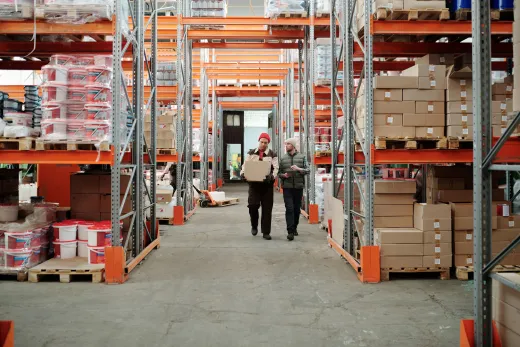
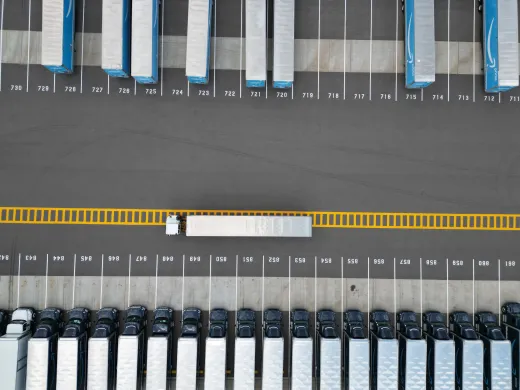
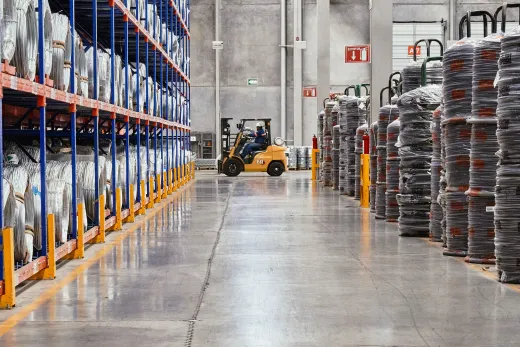
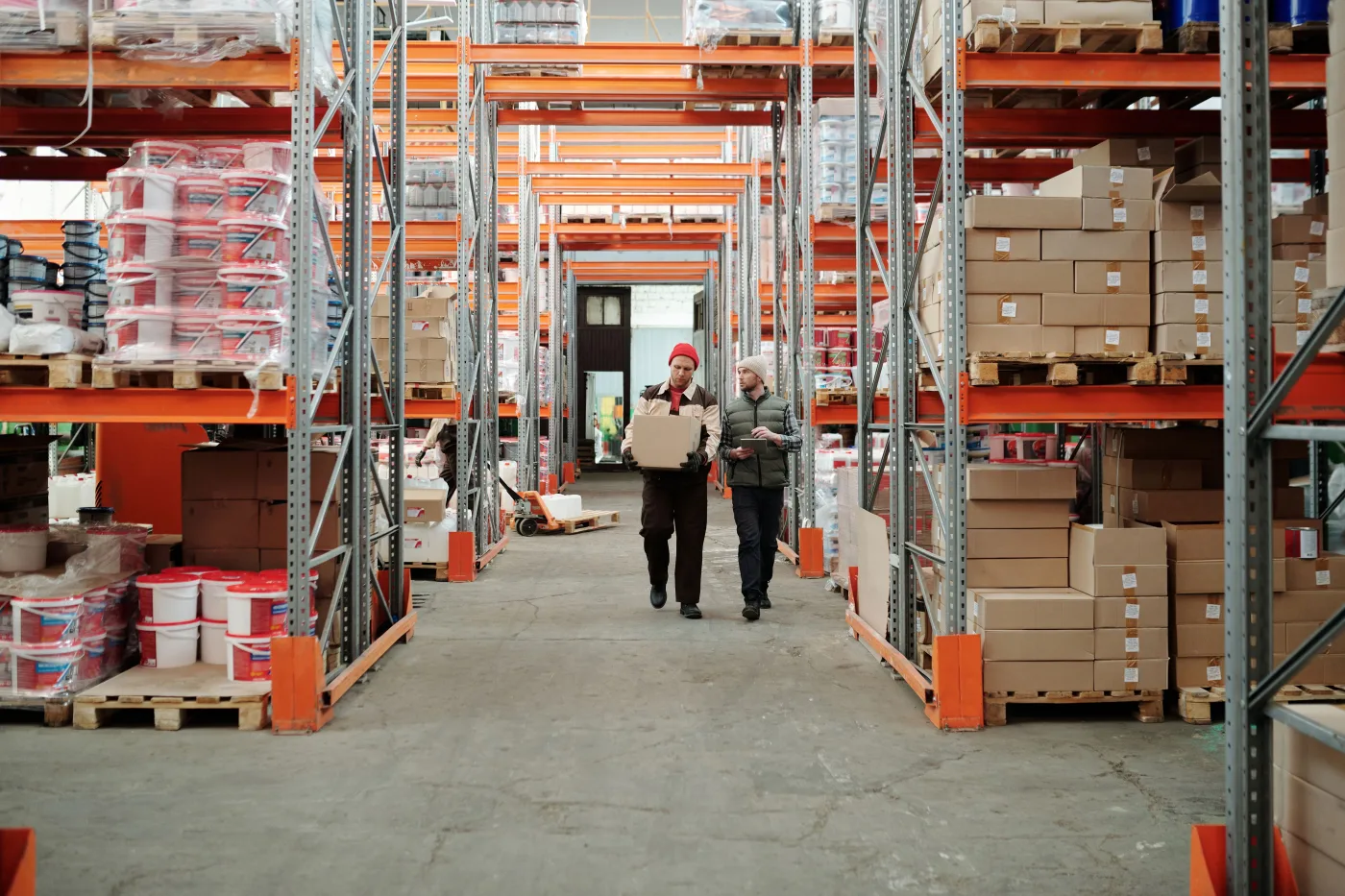
A logistics chain is built from two kinds of component, and understanding the difference is the key to managing it. Nodes are the fixed points where goods pause: factories, suppliers, ports, distribution centres, warehouses and retail stores. Links are the movements that connect those points: the road, rail, sea and air journeys that carry goods from one node to the next. A product's journey is simply an alternating run of nodes and links, and the performance of the whole chain is set by how well each one is designed and how cleanly they hand goods over.
| Component | What it is | Examples | Main concern |
|---|---|---|---|
| Nodes | Fixed points where goods stop, are stored or are handled | Factories, ports, warehouses, distribution centres, stores | Throughput, storage cost, handling accuracy |
| Links | The movements that connect nodes | Road, rail, sea and air transport routes | Speed, cost, reliability, carbon |
| Handovers | The transfer of goods and data between a link and a node | Loading, unloading, receiving, cross-docking | Delay, damage, information loss |
Handovers deserve special attention because they are where most problems hide. Goods can move quickly along a link and be stored efficiently in a node, yet still lose hours or accuracy in the transfer between them: a lorry waiting to unload, a receiving team re-keying a delivery note, a container held at a port for paperwork. A well run logistics chain treats these joins as first-class parts of the design, not as gaps between the interesting bits, because the flow is only ever as good as its weakest handover.
Managing flow and visibility
If nodes and links are the anatomy of the logistics chain, flow is its physiology. Managing the chain means keeping goods, information and money moving through it steadily, without the bottlenecks where stock piles up or the gaps where a node sits idle waiting for a delivery that has not arrived. Three flows run through every logistics chain at once, and they need to stay in step:
- The physical flow. The goods themselves, moving forwards from origin to destination and sometimes backwards as returns and recycling.
- The information flow. Orders, delivery statuses, stock levels and documents that tell each node what is coming and what to do with it.
- The financial flow. The payments to suppliers, carriers and providers that keep the whole chain funded and moving.
Visibility is what lets you manage all three deliberately rather than react to them. When you can see where goods are, what is coming next and where stock is building up, you can smooth the flow before a bottleneck forms. When you cannot, disruption arrives without warning and the instinctive response is to hold extra stock everywhere just to feel safe, which quietly inflates cost across every node. Poor visibility is the single most expensive weakness in most logistics chains, and it is almost always a data problem rather than a physical one.
You cannot flow what you cannot see. Most flow problems are not caused by trucks or warehouses failing; they are caused by nodes working from stale or missing information. Fix the visibility and a surprising amount of the physical friction, the safety stock, the expedited shipping and the guesswork, simply disappears with it.
First, middle and last mile
The stages of a logistics chain are commonly split into three parts, named by distance and role rather than literal miles. Each has its own economics, and the last is where most of the cost and complexity sits.
First mile
Moving goods from the origin, such as a factory or supplier, into the logistics network.
Middle mile
Carrying goods in bulk between hubs, ports and warehouses across the core of the chain.
Last mile
The final delivery to the customer or store, typically the most expensive and complex stage.
The first mile sets the tone for everything after it: goods that leave the origin late, mislabelled or incomplete carry those problems all the way down the chain. The middle mile is where scale and efficiency live, moving large volumes between hubs on the cheapest reliable modes, and it is usually the most optimised stage because the flows are predictable. The last mile is the hardest, because it fragments into thousands of individual drops to scattered addresses, often with tight delivery windows and customers watching for a tracking update. It is short in distance but long in cost, and improving it is where much of the effort in modern logistics is now spent.
Thinking in these three stages helps because each one rewards a different approach. The first mile is won by getting data and labelling right at the source, so goods enter the chain clean. The middle mile is won by consolidation and mode choice, moving as much as possible together on the most efficient reliable route. The last mile is won by density and visibility, packing deliveries into efficient rounds and keeping the customer informed at every step. Treating all three as one undifferentiated delivery problem is a common and costly mistake, because a tactic that works well in the middle mile often does the opposite in the last.
The cost drivers of a logistics chain
Understanding where money goes in a logistics chain is the first step to controlling it. A handful of drivers account for most of the spend, and they interact, so pushing one down often pushes another up.
- Transport. Usually the single largest cost, driven by fuel, distance, mode and the expensive last mile. Every choice trades speed against price.
- Warehousing and storage. The cost of holding goods at nodes: space, equipment, energy and the handling labour that goes with it.
- Inventory holding. The cash tied up in stock sitting in the chain, plus the risk of it ageing, expiring or becoming obsolete.
- Handling and labour. The people and equipment that load, unload, pick and pack at every node and handover along the way.
- Poor visibility. A hidden driver: weak information forces safety stock, expedited shipping and rework that a clearer view would avoid.
The important insight is that these drivers are connected, so optimising one in isolation can quietly raise the total. Choosing a distant supplier on unit price alone lengthens transport and lead times; running inventory ultra-lean to cut holding cost raises the pressure on transport and the risk of expensive expediting when demand spikes. Managing a logistics chain well means seeing these trade-offs across the whole chain and picking the balance that lowers total cost, rather than the local win that looks good on one node's budget.
Building resilience into the chain
A logistics chain optimised purely for cost is usually a fragile one. Squeeze out every buffer, rely on a single supplier or a single route, and the chain runs beautifully until the day something breaks, at which point it has nothing to absorb the shock. Resilience is the deliberate capacity to keep goods flowing when a link or node fails, and it has become as important as raw efficiency. The two pull against each other, and the skill is balancing them rather than maximising either.
Practical resilience comes from a few well understood moves. Redundancy means having more than one supplier, route, carrier or third-party logistics provider for anything critical, so a single failure does not stop the flow. Flexibility means being able to switch modes or reroute quickly when a port closes or a road is blocked. Visibility, once again, is the foundation, because you cannot respond to a disruption you cannot see coming. And strong supplier relationships matter more than any of these under stress, since a supplier who treats you as a priority partner will keep you supplied when capacity is scarce. This is where the logistics chain reaches back into sourcing: the resilience of the physical chain is set in large part by the choices made about suppliers long before any goods move.
Technology that ties the chain together
Technology is what turns a set of separate nodes and links into a chain that behaves as one, and the gains come from connection rather than from any single clever tool. Several systems each own a slice of the picture:
- Transport management systems. Plan routes, choose carriers and track movements across the links of the chain.
- Warehouse management systems. Run the nodes, directing storage, picking and dispatch inside each warehouse or distribution centre.
- Planning and forecasting tools. Set inventory targets and match supply to expected demand so the chain is not run on guesswork.
- Procurement platforms. Manage sourcing, suppliers and buying, so the information flow starts clean at the very top of the chain.
The advantage is unlocked when these systems share data instead of forcing people to re-key it between them. When a purchase order, a supplier record and a delivery status all reference the same information, every node from the buying desk to the last-mile driver works from one version of reality, and the whole chain runs on current status rather than yesterday's spreadsheet. For the deeper picture of how physical movement fits inside the broader network, our logistics and supply chain management guide is a natural next read, while the SCM guide covers the coordinating discipline in brief.
Getting the foundation right with ProcureWave
Much of what makes a logistics chain run smoothly is decided before any goods move, at the sourcing layer, because that is where suppliers are chosen, routes are implied, terms are set and the information flow begins. A distant supplier picked on price alone builds long, fragile links into the chain; a reliable, well managed one makes the physical flow simpler and more resilient from the first mile onwards. The supply chain management discipline recognises this, which is why sound procurement is treated as the start of the chain rather than a side task. Our full supply chain management guide sets out how the sourcing layer feeds everything downstream.
That upstream layer is exactly the part ProcureWave handles: bringing sourcing, supplier management and the buying process together so purchase requests, approvals, supplier records and spend data all live in one connected system. When that information starts clean and stays visible, the logistics chain has a reliable foundation to build on, rather than a scatter of inboxes and spreadsheets that every node downstream has to work around.
A practical way to begin is to map your own chain from origin to destination, mark every node and link, and ask where visibility breaks down first. For most organisations the answer sits at the sourcing and supplier-data end, which is the easiest place to make an early, measurable improvement that the rest of the logistics chain then benefits from. If you would like to see how the procurement side of your chain could run in one connected place, get in touch and we will walk you through it with your own process in mind.
A logistics chain is only ever as strong as its weakest handover and as clear as its worst blind spot. Understand it as connected links and nodes rather than separate jobs, keep goods, information and money flowing together across all of them, build in enough redundancy to survive a shock, and connect the data that runs through the whole thing. Do that, and the goods quietly arrive where they should, which is exactly what a well run chain is meant to look like.
Frequently asked questions
What is the logistics chain?
The logistics chain is the connected sequence of transport, storage and handling steps that moves goods from their point of origin to their final destination. It is made up of links (the movements between places) and nodes (the fixed points such as factories, warehouses and stores where goods pause), and managing it well means keeping goods flowing across all of them with as little cost, delay and waste as possible.
What is the difference between the logistics chain and the supply chain?
The logistics chain is the physical flow of goods: the transport, storage and handling that carries a product from origin to destination. The supply chain is broader, adding planning, sourcing, production and the information and money flows around that physical movement. In practice the logistics chain is the execution layer inside the wider supply chain.
What are the first, middle and last mile?
They describe the three broad stages of the logistics chain. The first mile moves goods from the origin, such as a factory or supplier, into the network. The middle mile carries them in bulk between hubs, ports and warehouses. The last mile is the final delivery to the customer or store, and it is usually the most expensive and complex stage of the whole chain.
What are the main cost drivers in a logistics chain?
The biggest drivers are transport (especially fuel and the last mile), warehousing and storage, inventory holding costs, and the labour and handling at each node. Fragmented information is a hidden driver too, because poor visibility forces businesses to hold extra stock and pay for expedited shipping when things go wrong.
How does technology improve logistics chain management?
Technology improves the logistics chain mainly by adding visibility and connecting data. When transport, warehouse, planning and sourcing systems share the same information, every node works from one version of reality, disruptions are seen early, and decisions are based on current status rather than last week's spreadsheet.
Want to see this in your own numbers?
Book a tailored demo and we will show ProcureWave running on scenarios that match your business.
Get in touch