Logistics management is the discipline that keeps goods flowing through a business, from the moment materials arrive to the moment a finished product reaches the customer. Done well, it is almost invisible: orders turn up complete, on time and undamaged, and stock is neither piled high nor missing. Done badly, it shows up everywhere as delay, cost and frustrated customers. This complete guide explains what logistics management is, the components it covers, how third-party providers fit in, the metrics that matter, the technology behind it, the challenges it faces, and where procurement connects to the whole picture.
Key takeaways
- Logistics management plans, executes and controls the movement and storage of goods across a business.
- Its core components are inbound and outbound logistics, transport, warehousing, inventory, fulfilment and returns.
- A handful of KPIs, led by on-time in-full and perfect order rate, tell you most of what you need to know.
- Procurement feeds logistics upstream: the suppliers and terms you choose set the cost and reliability logistics must deliver.
What is logistics management?
Logistics management is the planning, execution and control of the flow and storage of goods, so they reach the right place, at the right time, in the right condition and at the right cost. It is the deliberate control layer over the physical activity of moving and storing things. Where basic logistics is the act of shifting a pallet from A to B, logistics management decides how many pallets, by what route, held where, and at what cost, and then measures whether the plan actually worked.
The discipline answers a deceptively simple question: how do we get goods from where they are to where they need to be, reliably and affordably, again and again? That means balancing competing pressures at every turn. Faster delivery usually costs more; holding more stock protects against shortages but ties up cash and space; a cheaper supplier far away may lengthen lead times and raise transport bills. Logistics management is the practice of seeing these trade-offs across the whole flow rather than optimising any one part in isolation, and choosing the balance that serves the business and its customers best.
The components of logistics management
Logistics management is best understood through the components it coordinates. Each is a discipline in its own right, with its own costs, risks and trade-offs, and the job of management is to make them work as one rather than as competing silos.
- Inbound logistics. The flow of materials and goods coming into the business from suppliers, including receiving, checking and putting away. Weak inbound flow starves everything downstream.
- Outbound logistics. The flow of finished goods going out to customers, from picking and packing through to final delivery. This is where logistics meets the customer most visibly.
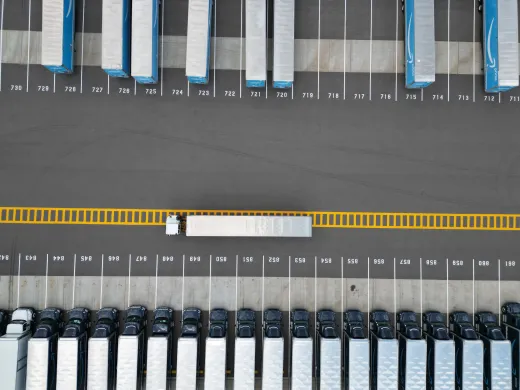
- Transport. Moving goods between suppliers, sites and customers by road, rail, sea or air. It is usually the largest logistics cost, and every mode choice trades speed against price.
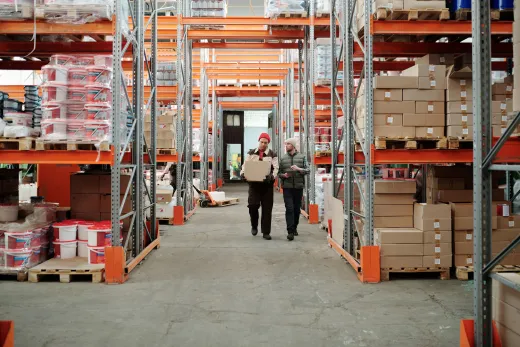
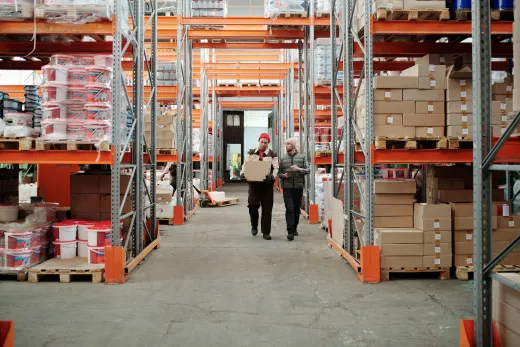
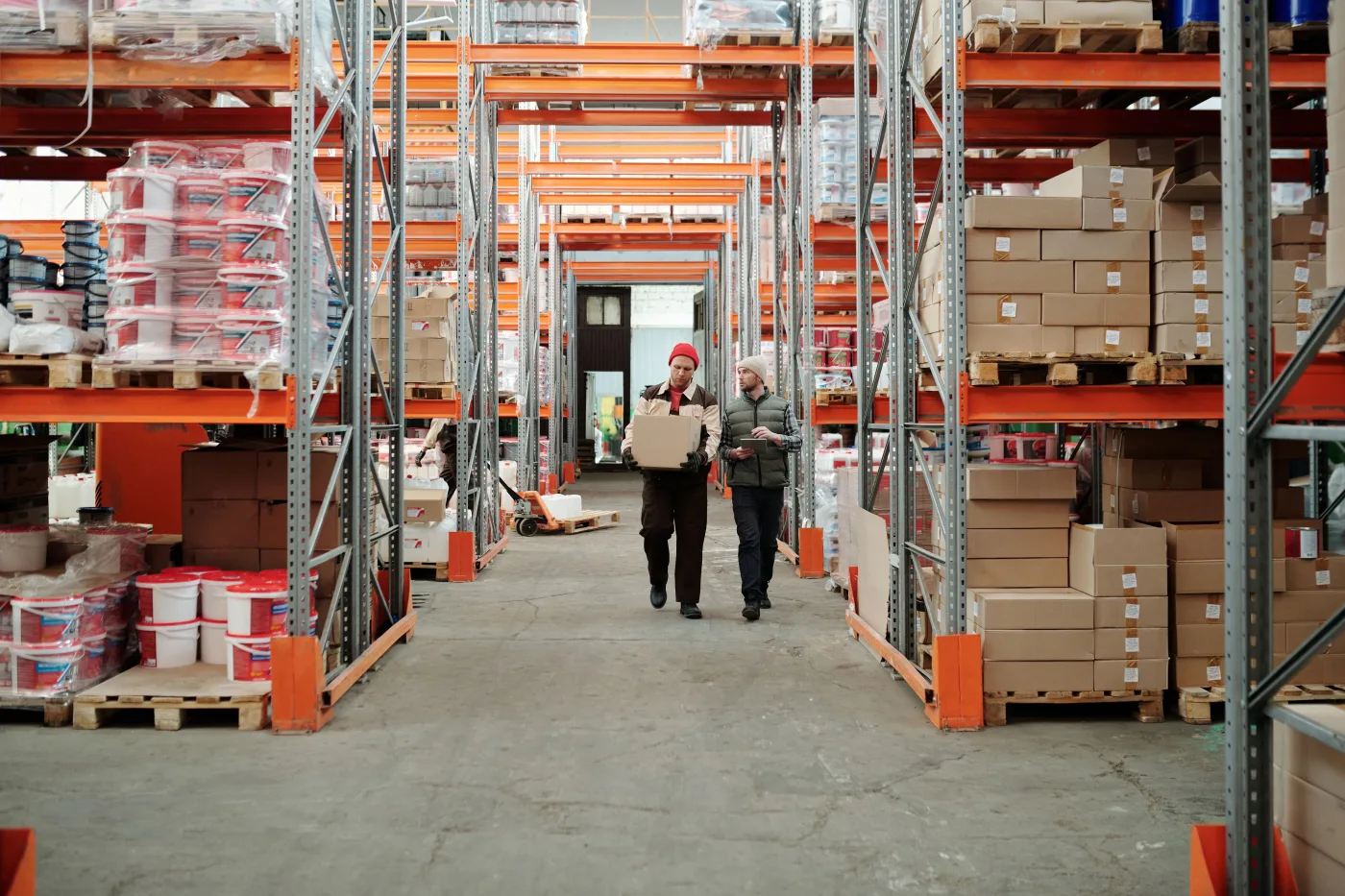
- Warehousing. Storing goods safely and accessibly between the point they arrive and the point they are needed. Good design shortens picking time and reduces damage and loss.
- Inventory management. Deciding how much stock to hold, where, and when to replenish it. Too much ties up cash; too little risks stockouts and missed orders.
- Order fulfilment. Picking, packing and dispatching customer orders accurately and on time. Errors here are the most visible of all, because the customer sees them directly.
- Reverse logistics. The flow that runs the other way: returns, repairs, recycling and disposal. Often neglected, it protects both cost and customer trust and is increasingly a sustainability priority.
The components are linked, not separate. A transport decision that saves money can force more warehousing; a lean inventory policy raises the pressure on fulfilment speed; a poor returns process quietly erodes margin. Managing logistics as a whole, rather than tuning each part on its own, is what lets you see these connections and choose the balance that serves the wider flow.
Inbound versus outbound logistics
The clearest way to picture logistics management is as two flows meeting in the middle. Inbound logistics brings the raw materials, components and goods a business needs into its operation; outbound logistics takes the finished product out to the customer. Between them sit the warehouses, inventory and processing that turn one flow into the other. Getting both right, and keeping them in step, is the heart of the discipline.
| Aspect | Inbound logistics | Outbound logistics |
|---|---|---|
| Direction | Goods coming into the business | Goods leaving for the customer |
| Key partners | Suppliers and carriers | Customers and delivery providers |
| Core activities | Receiving, checking, put-away, storage | Picking, packing, dispatch, delivery |
| Main risk | Late or wrong materials starving operations | Late or wrong deliveries losing customers |
| Driven by | Procurement and supply planning | Sales orders and demand |
The two flows are not independent. Unreliable inbound logistics forces a business to hold buffer stock to feel safe, which raises warehousing and inventory costs on the outbound side. Equally, volatile outbound demand pushes pressure back up the chain to suppliers and inbound flow. Managing them together, with a shared view of what is coming in and what is going out, is what keeps the whole operation steady rather than lurching between shortage and surplus.
Third-party logistics and outsourcing
Not every business runs its own logistics, and many are better off not trying to. A third-party logistics provider, or 3PL, is an outside specialist that performs logistics activities on your behalf, such as warehousing, transport and fulfilment. The model lets a business tap scale, geographic reach and operational expertise without owning warehouses, fleets or the staff to run them, which is one of the fastest ways to grow reach without heavy fixed investment.
3PL
A provider that runs logistics activities such as warehousing, transport and fulfilment on your behalf.
4PL
A provider that coordinates and manages multiple logistics providers and the wider flow on your behalf.
Fulfilment
The end-to-end process of receiving, picking, packing and shipping a customer order.
Outsourcing logistics is a strategic choice, not merely an operational one. Handing warehousing and transport to a 3PL frees a business to focus on its product and customers, and it converts fixed costs into variable ones that flex with volume. The trade-off is a loss of direct control and a new dependency to manage. That is exactly why a 3PL should be selected and managed with the same rigour as any other critical supplier, because in the end that is what it is. The sourcing discipline that surrounds the relationship matters as much as the service itself.
The KPIs that measure logistics management
Logistics performance is judged by a handful of hard metrics, and tracking a few honest ones tells you most of what you need to know. Chasing dozens of measures usually hides the picture rather than sharpening it.
- On-time in-full (OTIF). The share of deliveries that arrive on time and complete, the core reliability signal for any logistics operation.
- Perfect order rate. Orders delivered complete, on time, undamaged and correctly documented; the single best summary of end-to-end health.
- Order cycle time. How long from customer order to delivery, a direct measure of speed and responsiveness.
- Inventory turnover. How quickly stock is sold and replaced, balancing tied-up cash against the risk of stockouts.
- Transport cost per unit. What it costs to move each item, one of the clearest levers on total logistics spend.
The value of these metrics is in the trend, not the single reading. A perfect order rate that drifts down over a quarter is a warning worth acting on long before any one late delivery. And because the components of logistics are linked, the numbers should be read together: a fall in transport cost per unit that comes with slower cycle times and lower OTIF is not a saving, it is a problem in disguise. Honest, connected measurement is what turns logistics management from firefighting into steady improvement.
Technology in logistics management
Technology is what lets logistics management run on current information rather than last week's spreadsheet, and the gains come from connection rather than from any single tool. Several systems each own a slice of the picture, and the advantage appears when they share data instead of forcing people to re-key it between them.
- ERP. The operational and financial backbone that records what is bought, made, held and sold across the business.
- Warehouse management systems. Tools that manage stock locations, picking and put-away to keep the warehouse running efficiently.
- Transport management systems. Software that plans routes, books carriers and tracks deliveries against the promises made to customers.
- Procurement platforms. Systems that manage sourcing, suppliers and the buying process, so the information flow starts clean at the very top of the chain.
When a purchase order, a supplier record and a delivery status all reference the same information, everyone from the buyer to the warehouse floor works from one version of reality. That single source of truth is what modern logistics management depends on, because good decisions rest on trustworthy, timely data. For the wider discipline these systems support, our supply chain management guide sets out how planning, sourcing and delivery fit together, and our SCM guide gives a shorter primer on the same ground.
Common challenges in logistics management
The pressures that push against logistics performance are familiar and recurring, and almost all of them trace back to one root cause: information that does not flow freely.
- Lack of visibility. When you cannot see beyond your immediate suppliers and carriers, disruption arrives without warning and you carry excess stock to feel safe.
- Demand volatility. Unpredictable orders make forecasts unreliable, and the effect is amplified the further you sit from the end customer.
- Rising expectations. Faster delivery and full transparency have become the baseline, raising the bar for every part of the operation at once.
- Fragmented systems. Data scattered across spreadsheets and inboxes means no one holds the full picture, so decisions lag reality.
- Cost and sustainability pressure. Transport, fuel and warehousing costs keep rising, while customers and regulators increasingly expect lower-carbon operations too.
None of these is solved by heroics on the warehouse floor. They are structural problems that respond to better information and tighter coordination, which is why so much of improving logistics management starts well upstream of the goods themselves, at the point where suppliers are chosen and data first enters the chain.
Where procurement fits, and how ProcureWave helps
Sitting upstream of logistics is procurement, the sourcing and buying part of the operation. Its decisions shape logistics before a single item ever moves. Choose a distant supplier on price alone and you inherit long transport routes and fragile lead times; choose a reliable regional one and logistics becomes simpler and more resilient. Sound sourcing sets the cost, quality and dependability that logistics then has to deliver on, which is why the two are best treated as one continuous flow rather than separate departments. For the full picture of how they connect, our logistics and supply chain management guide explains how logistics nests inside the wider supply chain.
Much of what makes logistics run smoothly therefore starts before any goods move, at the procurement layer, because that is where suppliers are chosen, terms are set and the information flow begins. When purchase requests, approvals, supplier records and spend data all live in one connected place, logistics has a reliable foundation to build on rather than a scatter of inboxes and spreadsheets to work around. That is the part ProcureWave handles: bringing sourcing, supplier management and the buying process together so the information flow starts clean and stays visible.
A practical way to begin is to map your own flow from supplier to customer and ask where visibility breaks down first. For most organisations the answer sits in sourcing and supplier data, which is the easiest place to make an early, measurable improvement that logistics then benefits from. If you would like to see how the procurement side of your operation could run in one connected place, get in touch and we will walk you through it with your own process in mind.
Logistics management is not a back-office afterthought; it is the discipline that decides whether the right product reaches the right place at the right cost, day after day. Understand its components, measure a few honest metrics, connect the systems that run it, and keep procurement feeding it with sound sourcing. Do that, and the goods quietly arrive where they should, which is exactly what well-run logistics is meant to look like.
Frequently asked questions
What is logistics management?
Logistics management is the planning, execution and control of how goods move and are stored across a business, from materials arriving at the door to finished products reaching the customer. It covers transport, warehousing, inventory, order fulfilment and returns, and its aim is to deliver the right goods to the right place, on time and at the lowest sensible cost.
What are the components of logistics management?
The main components are inbound and outbound logistics, transport, warehousing, inventory management, order fulfilment and reverse logistics. Inbound covers goods coming in from suppliers; outbound covers goods going out to customers; and the activities in between store, move and process those goods along the way.
What is the difference between logistics and logistics management?
Logistics is the physical movement and storage of goods. Logistics management is the discipline of planning, coordinating and improving those activities so they work together efficiently. One is the activity; the other is the deliberate control of it. Our logistics and supply chain management guide sets out how the two ideas nest.
What are the main KPIs in logistics management?
The most useful logistics KPIs are on-time in-full (OTIF), perfect order rate, order cycle time, inventory turnover and transport cost per unit. Together they show whether deliveries are reliable, whether stock is working hard, and whether the cost of moving goods is under control.
How does procurement relate to logistics management?
Procurement sits upstream of logistics and shapes it before any goods move. The suppliers you choose, the terms you agree and the lead times you accept all determine how easy or hard logistics will be. Sound sourcing gives logistics a reliable foundation; weak sourcing leaves it firefighting.
Want to see this in your own numbers?
Book a tailored demo and we will show ProcureWave running on scenarios that match your business.
Get in touch