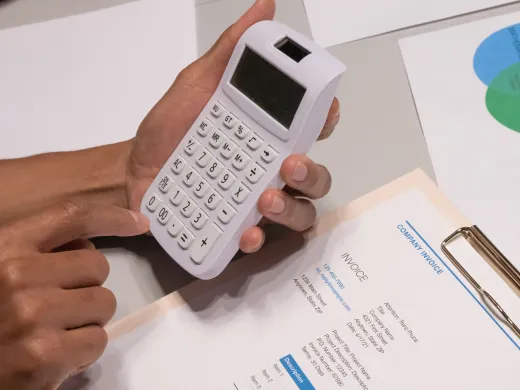
A quotation and an invoice sit at opposite ends of the same transaction, yet they are the two documents people most often mix up. A quotation is a priced offer made before any work happens; an invoice is a demand for payment issued after delivery. This complete guide explains what each one is, how they differ, and when each is issued. It walks the document flow from quotation to purchase order to invoice, sets out what every version should contain, places the proforma invoice in between, and shows how software links the whole chain together so nothing is re-typed and nothing slips.
Key takeaways
- A quotation is an offer issued before work starts; an invoice is a demand for payment issued after delivery.
- The natural flow runs quotation, then purchase order, then invoice, with each document referencing the last.
- A proforma invoice sits between the two: it looks like an invoice but is not yet a demand for payment.
- Because both documents share most fields, connected software can carry a quote through to an invoice without re-keying.
What a quotation is
A quotation is a formal offer to supply goods or services at a stated price. It sets out what you would provide, in what quantity, at what cost and on what terms, so the buyer can decide whether to go ahead. The defining feature is timing: a quotation is issued before any work is done. It is a commitment to a price, not a request for money. When a buyer accepts a quotation within its validity period, it usually forms the basis of a binding agreement on the price and scope stated, which is why the validity date and the terms carry so much weight.
A quotation is not the same as an estimate, and the difference matters. An estimate is an approximate figure, a considered guess at the likely cost, and it is not meant to be held to the penny. A quotation, by contrast, is a firm price you are prepared to stand behind. Tradespeople often give an estimate when the final scope is genuinely uncertain, then firm it up into a quotation once the details are settled. If you produce quotes regularly, our quotation maker guide walks through building one that looks professional and leaves nothing out.
What an invoice is
An invoice sits at the opposite end of the transaction. Where a quotation is an offer made up front, an invoice is a demand for payment issued after you have delivered the goods or services. The quotation says "here is what it would cost"; the invoice says "here is what you now owe". An invoice is a commercial and often a legal document: it records the sale, states the amount due, sets a payment deadline, and in most tax systems it is the record on which the buyer reclaims tax and the seller reports it.
Because the invoice is the document money moves against, it carries fields a quotation does not need. It must have a unique invoice number, an issue date and a clear due date, and it usually shows how to pay, whether that is bank details, a payment link or terms already on file. When a job began with a quotation, the invoice should bill exactly what was agreed, so the two documents ought to reconcile line for line. Our complete guide to invoices covers the anatomy of a compliant invoice in full.
Quotation vs invoice: the differences at a glance
The two documents look similar on the page, which is exactly why they get confused. The table below sets them side by side on the points that actually separate them, from when each is issued to what it commits the buyer to do.
| Aspect | Quotation | Invoice |
|---|---|---|
| Purpose | An offer to supply at a stated price | A demand for payment already owed |
| Timing | Before any work is done | After goods or services are delivered |
| Asks the buyer to | Decide whether to accept | Pay the amount due |
| Money involved | None changes hands | Payment falls due |
| Key extra field | Validity date and terms of offer | Invoice number and payment due date |
| Legal effect | Basis of an agreement once accepted | Record of a sale and a debt |
| Can be revised | Freely, until accepted | Only by credit note once issued |
Read down the table and a single theme runs through it. A quotation is forward-looking and conditional: it proposes, and the buyer is free to accept or decline. An invoice is backward-looking and settled: the work is done, the price is fixed, and what remains is payment. Everything else, the number formats, the legal weight, whether the document can be changed, follows from that one difference in timing.
The document flow: quotation to purchase order to invoice
Neither document exists in isolation. In a well-run purchase, they are two links in a chain that carries a transaction from first enquiry to final payment. Understanding that chain is the clearest way to see why the quotation and the invoice never overlap in time. The sequence runs like this:
- Request for quotation. The buyer describes what they need and asks one or more suppliers to price it.
- Quotation. Each supplier returns a priced offer with a validity date and terms.
- Purchase order. The buyer accepts a quote by raising a purchase order that authorises the spend.
- Delivery. The goods or services are supplied against that order.
- Invoice. The supplier bills for what was delivered, at the agreed price.
- Payment. The buyer settles the invoice within the stated terms.
The purchase order is the hinge in the middle. It is the buyer's formal commitment to buy at the quoted price, and it should point back to the quotation number so both sides work from the same figures. When the invoice arrives, it in turn references the purchase order, closing the loop. This is the classic three-way match that finance teams rely on: the purchase order, the delivery record and the invoice should all agree before anyone pays. When each document cleanly references the one before it, reconciliation is quick and disputes are rare. When they do not, someone ends up copying numbers between systems and hoping they line up.
What each document should include
Most of the fields on a quotation and an invoice are identical, which is both why they are confused and why software can link them so easily. The overlap is large; the differences are few but important. Both documents share this core:
- Your business details. Name, address, contact information and tax registration number.
- The customer. Their legal name and address, as they need it for their own records.
- A reference and date. A unique document number and the date it was issued.
- Itemised lines. A description, quantity and unit price for every item or service.
- Tax and total. The correct tax shown separately, and the full amount.
From there the two diverge. A quotation adds a validity date, the deadline until which the price holds good, and the terms of the offer: lead time, what is included and what is excluded. Leave the validity date off and a buyer could accept a months-old quote at prices that have since risen. An invoice instead adds a payment due date, a formal invoice number kept in unbroken sequence, and the means of payment, whether bank details or a link. Get those document-specific fields right and each does its job without leaving you exposed.
The proforma invoice in between
Sitting between the quotation and the final invoice is a third document that causes more confusion than either: the proforma invoice. It looks exactly like a real invoice, carrying the same layout and figures, but it is clearly marked "proforma" and it is not a demand for payment or a record of a completed sale. It is best thought of as a firmed-up offer presented in invoice format.
A proforma invoice is not a tax invoice and does not go in your sales ledger. It confirms what will be billed once the order proceeds, but no money is formally owed against it and no tax is reported on it. The real, numbered invoice follows once the goods or services are delivered. Treat the proforma as a commitment on paper, not as an account receivable.
Businesses reach for a proforma invoice in a handful of common situations: to confirm an agreed order in a format the buyer's system can process, to request a deposit or advance payment before starting, or to accompany goods through customs where the authorities need a value before a final invoice exists. In each case the proforma bridges the gap between an accepted quotation and the invoice that eventually bills the work. Our proforma invoice guide sets out exactly when to use one and how it should be laid out.
Common mistakes and how to avoid them
Most problems with these documents come not from getting the maths wrong but from confusing what each one is for. A few mistakes turn up again and again. The first is treating a quotation as binding on the buyer: it is an offer, and until it is accepted the buyer owes nothing and can walk away. The second is the mirror image, treating a proforma invoice as a real invoice and recording it as a sale, which inflates your figures and muddles your tax.
The third common error is omitting the validity date from a quotation, which leaves your price open-ended in a market that moves. The fourth is billing an amount on the invoice that does not match the accepted quote, usually because the two documents were prepared in different tools with no link between them. That mismatch is what triggers queries, delays payment and erodes trust. The fifth is breaking the invoice number sequence, a small slip that creates real headaches at audit time. Every one of these mistakes is a symptom of the same underlying issue: documents that should reference one another being handled in isolation.
How software links quotes, orders and invoices
Because a quotation and an invoice share most of their fields and follow a fixed sequence, they are a natural fit for a connected system rather than a drawer of separate templates. When quoting, ordering and invoicing live in one place, an accepted quotation carries straight through to a purchase order and then to an invoice, with the figures travelling with it. Nobody re-types the customer, the line items or the total, so the copy-and-paste errors that cause invoice mismatches simply cannot occur.
That linkage delivers more than tidy paperwork. It gives you a clean request-to-invoice trail where every document points back to the one before it, so reconciliation and the three-way match happen almost by themselves. It keeps your quote and invoice numbers in unbroken sequence without anyone minding them. And it tells you at a glance which quotes are still open, which orders are awaiting delivery and which invoices are unpaid, the visibility that a set of disconnected documents can never give you. ProcureWave is built around exactly this chain, keeping quotations, purchase orders and invoices together with a clear audit trail from source to settlement.
None of this means you should abandon a simple template before you need to. If a spreadsheet quote and a basic invoice cover your work today, keep using them, and use this guide to make sure each document carries the right fields. But when quoting and billing become a volume task tied to orders and payment, handling them as separate files starts to cost you in errors and chasing. To see how ProcureWave would link your quotes, orders and invoices into one flow, get in touch and we will walk you through it on your own process.
Frequently asked questions
What is the difference between a quotation and an invoice?
A quotation is a priced offer made before any work happens; it tells the buyer what you would supply and at what cost. An invoice is a demand for payment issued after you have delivered. The quotation comes first and asks for a decision, while the invoice comes last and asks for money. Many jobs use both, with the accepted quotation setting the price the eventual invoice then bills.
Does a quotation come before or after an invoice?
A quotation comes first. The usual order is quotation, then a purchase order once the buyer accepts, then delivery, and finally an invoice. The quotation proposes a price, the purchase order authorises the spend, and the invoice bills for what was supplied. Keeping that sequence intact is what makes later reconciliation straightforward.
Is a proforma invoice the same as a quotation?
They are close cousins but not identical. Both are issued before payment and neither is a final demand for money. A quotation is framed as an offer you can accept, while a proforma invoice looks like a real invoice and is often used to confirm an agreed order, request a deposit, or clear customs. Our proforma invoice guide covers where it fits.
Can a quotation become an invoice automatically?
In a connected system, yes. Because a quotation and an invoice share most of the same fields, software can carry an accepted quote through to a purchase order and then to an invoice without anyone re-typing the figures. That link is what removes the copy-and-paste errors that creep in when the two documents live in separate tools.
Do a quotation and an invoice need the same information?
They overlap heavily but differ at the edges. Both carry your business details, the customer, itemised lines and a total. A quotation adds a validity date and the terms of the offer, while an invoice adds an invoice number, a payment due date and bank or payment details. Get those document-specific fields right and each does its job cleanly.
Want to see this in your own numbers?
Book a tailored demo and we will show ProcureWave running on scenarios that match your business.
Get in touch